Vibration Activated Sequence Pause
I received the prototype of VASP (Vibration Activated Sequence Pause) system from OGGLAB, which works in partnership with MJKZZ.de. The system connects directly to the MJKZZ controller (please note: Controller Version 2) MJKZZ WiFi/IR/USB Remote Motion Controller.

VASP is designed to prevent photographs from being captured while the setup is affected by vibrations or unwanted movement. This can be particularly useful when a car or truck passes near the house, when the capture system is accidentally touched or bumped, or whenever environmental vibrations could affect image sharpness during a photo sequence.
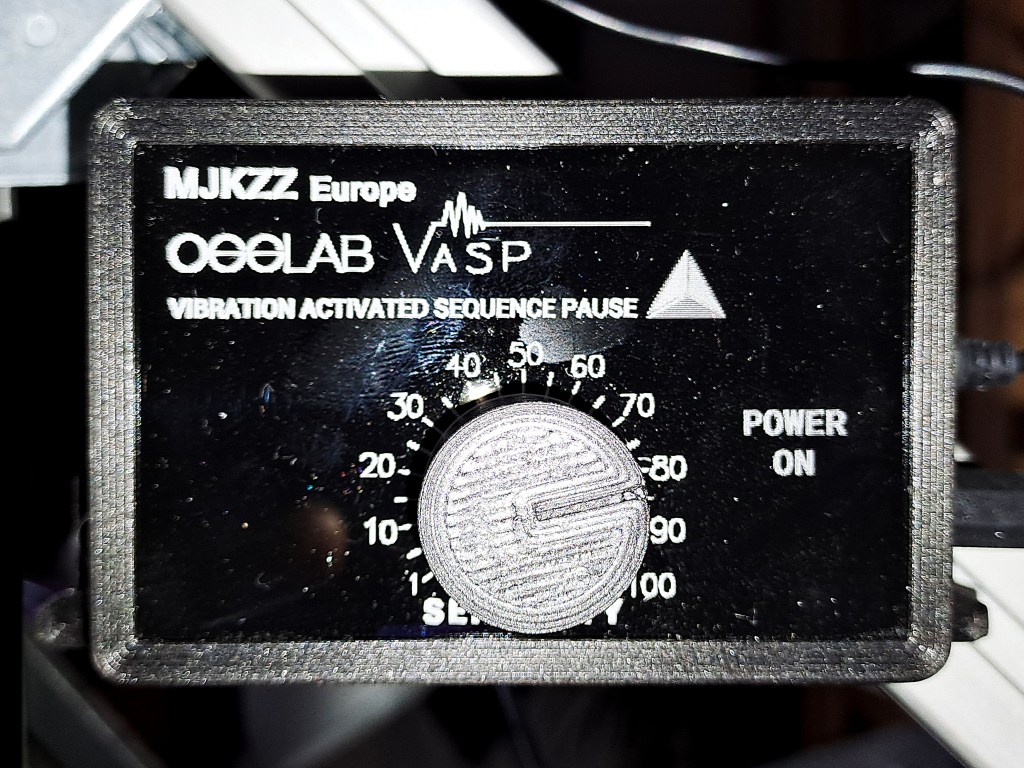
The sensitivity of the VASP system can be adjusted using a dedicated knob, allowing the detection threshold to be adapted to the specific setup and shooting conditions. During a capture sequence, when vibration above the selected sensitivity threshold is detected, the system pauses the capture process for a predefined period. This pause duration is adjusted directly on the MJKZZ controller. Once the vibration has subsided and the pause period has elapsed, the sequence automatically resumes.
An important feature is that VASP continues monitoring the vibration rather than simply reacting to a single vibration event. In other words, if the source of the vibration persists, the system keeps the sequence paused until the disturbance has disappeared. For example, when a car passes by, the resulting vibration may continue for several seconds and may fluctuate in intensity. Without this type of continuous monitoring, the system could potentially trigger the vibration detection repeatedly. With VASP, the capture sequence remains paused while the disturbance continues and resumes only when the setup has become sufficiently stable again.
The system is currently in the testing phase. The video linked below was created using the initial captures made to evaluate the system’s functionality and performance. I will later add a comparison of captures made with VASP enabled and disabled, which should provide a clearer indication of the actual improvement in image stability and the number of potentially unusable frames avoided.
This type of system is particularly useful for macro and high-magnification photography, where even very small movements can have a significant impact on image sharpness and focus consistency. It can be especially beneficial when using a DSLR or another camera with a mechanical shutter, as mechanical movement and environmental micro-vibrations can become more noticeable at high magnifications. The benefits may also be relevant with mirrorless cameras, particularly at very high magnification or when the entire setup is sensitive to environmental vibration.
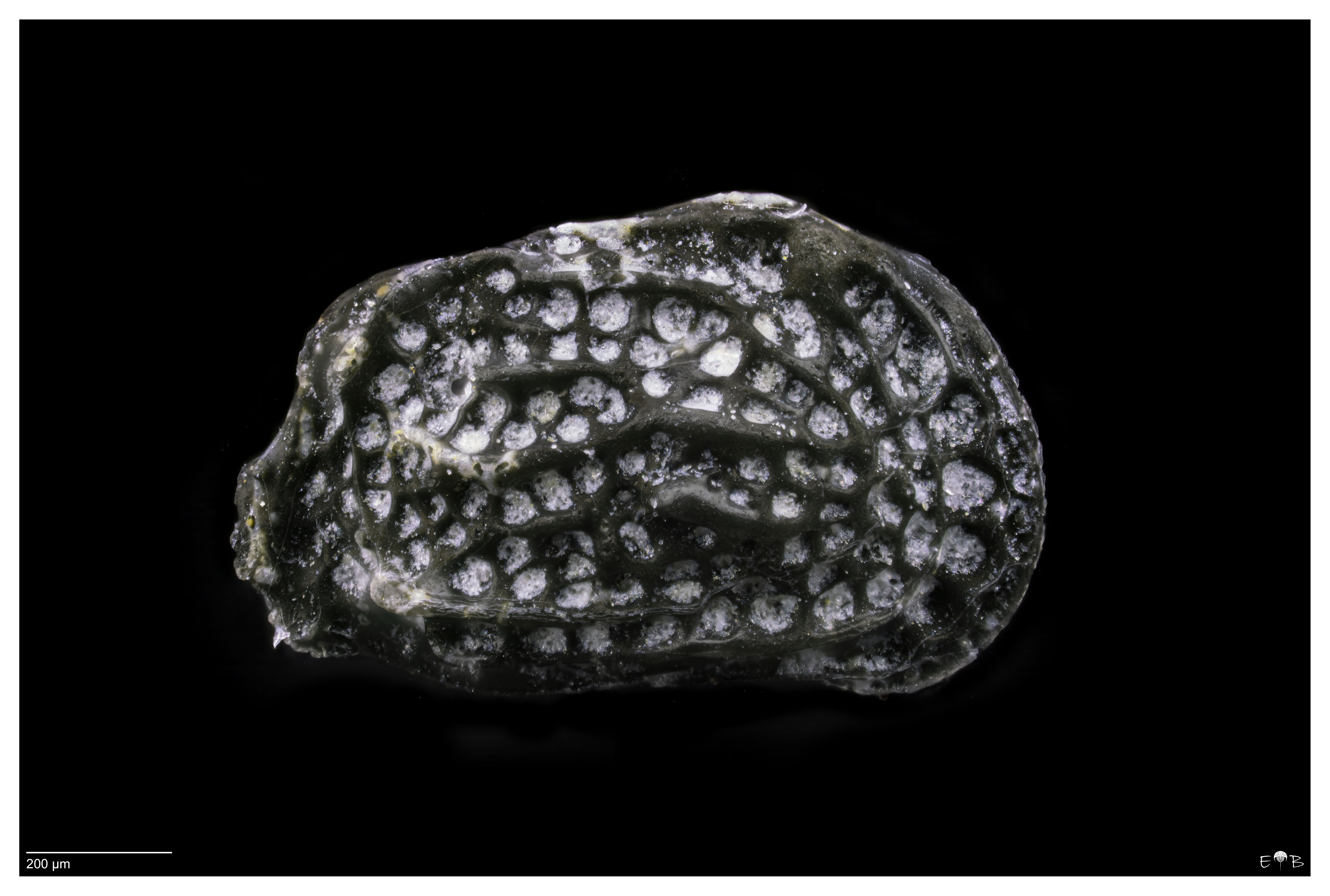
The image below was taken with VASP active while hopping around the room throughout the entire 150-frame acquisition period required to capture the valve volume of this tiny ostracod. Mitutoyo 20x objective, OGGLAB Vertical LED Lighting System, 2µm step between frames and 1/25″ shutter speed.
The following two videos show a direct comparison of the same setup, first without using the VASP controller and then with VASP enabled.
The difference is quite evident. In the first video, where VASP is not active, the image is affected by noticeable movement and temporary shifts caused by vibrations. These disturbances can be produced by passing cars, vehicles parked or moving outside the house, or even movement within the studio itself. Although some of these vibrations may appear relatively minor to the naked eye, they can become clearly visible at high magnification and can significantly affect the sharpness and consistency of the captured images.
In the second video, with VASP enabled, the image remains essentially stable. Despite cars passing outside, vehicles being moved or parked near the house, and movement within the studio, there is no comparable visible image shake. Instead of allowing the capture sequence to continue while the setup is vibrating, VASP detects the disturbance and temporarily pauses the sequence until the vibration has subsided.
This comparison demonstrates one of the main advantages of the system: VASP does not eliminate the source of the vibration—it prevents that vibration from being recorded in the image sequence. This can be particularly valuable when shooting long automated sequences, where it is impractical to monitor every frame and manually discard those affected by movement.
The benefit becomes especially significant at high magnifications. As magnification increases, even extremely small movements of the camera, subject, or support system can translate into substantial shifts in the image. This is particularly important in macro and focus-stacking photography, where a sequence may contain dozens or even hundreds of frames that must remain precisely aligned.
Therefore, while VASP is not a substitute for a rigid and properly isolated setup, it provides an additional layer of protection against unavoidable environmental micro-vibrations. In situations where achieving complete isolation is difficult—such as a studio located near a road or in a building subject to occasional movement—it can make a significant difference in the consistency and usability of the captured frames.
The two videos provide a particularly useful real-world demonstration: the same setup, under the same environmental conditions, with the only significant difference being the presence or absence of VASP.

